Roofing for working properties
Commercial Roofing in Little Rock
Discuss your building, roof condition, and project needs.
Commercial Roofing With Business Disruption in Mind
A commercial roofing problem can affect more than the roof. Leaks may interrupt tenants, inventory, equipment, employees, customer areas, or normal business operations. Commercial properties also tend to have more rooftop penetrations, drainage components, mechanical equipment, and low-slope areas than typical residential buildings, which makes careful evaluation important.
We are a roofing company that works with business owners, property managers, landlords, and facility contacts on commercial roof repair, installation, and replacement needs. We focus on defining the affected areas, explaining practical options, and organizing the work around the needs of the property.

Commercial Roof Conditions We Evaluate
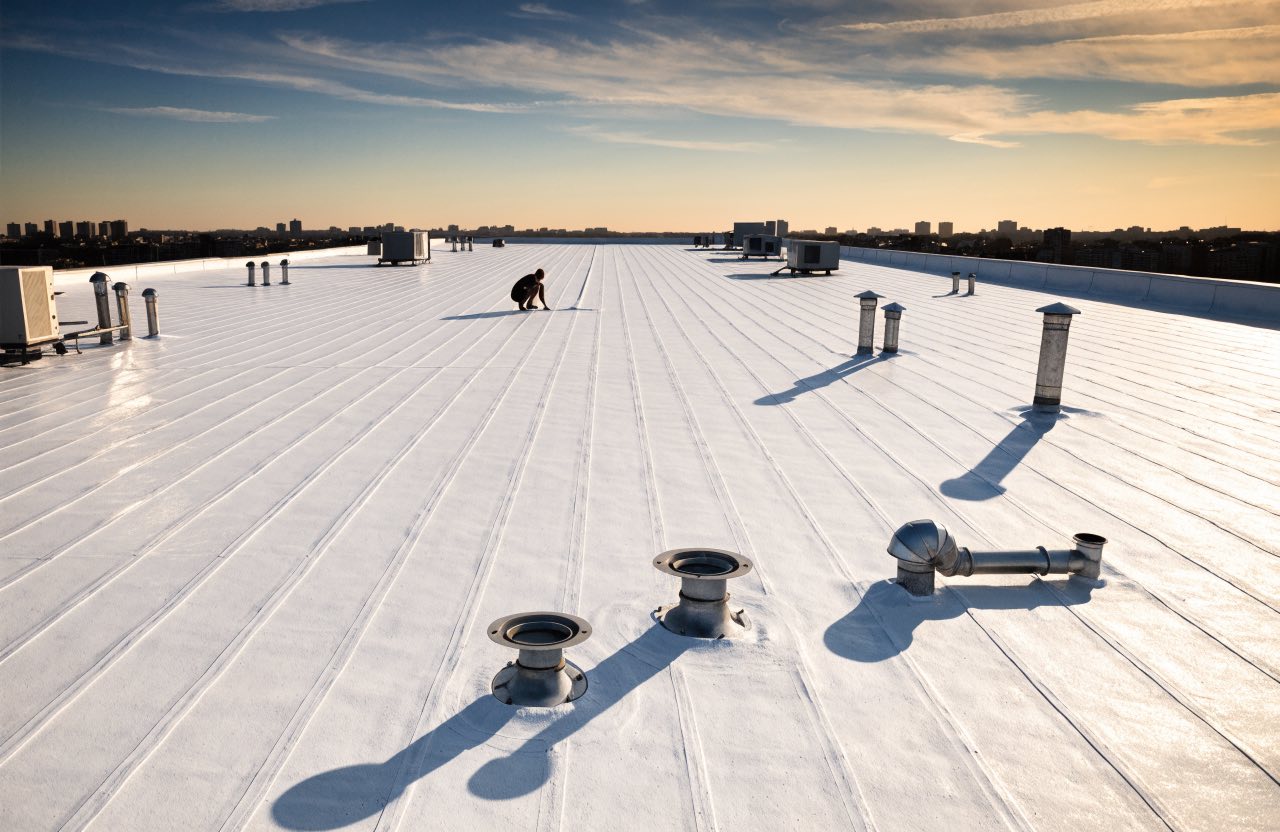
Commercial roofs can fail at seams, penetrations, flashing, drains, transitions, fasteners, membrane areas, or previous repair points. The right solution depends on the roof system and how widespread the deterioration has become.
Commercial Leak Investigation
We evaluate likely water-entry points and surrounding roof conditions to identify repairable problem areas.
Commercial Roof Repair
Localized failures may be repaired when the existing roofing system remains in serviceable condition.
Commercial Roof Replacement
Older or extensively damaged roofing may require replacement when repairs are no longer providing dependable performance.
Flashing and Penetrations
HVAC curbs, vents, pipes, walls, roof edges, and other penetrations require dependable waterproofing details.
Drainage Review
Ponding water, blocked drainage paths, or poorly performing roof drainage can contribute to ongoing roofing problems.
Typical Commercial Roofing Cost Factors
| Service | Estimated Cost | Average |
|---|---|---|
| Commercial roof repair | $750-$5,000+ | $2,000 |
| Low-slope replacement | $7-$16+ per sq. ft. | $11 per sq. ft. |
| Commercial metal roofing | $10-$22+ per sq. ft. | $16 per sq. ft. |
Commercial roofing costs vary significantly by system, access, building height, roof size, insulation, drainage, penetrations, tear-off requirements, and working conditions.

Why Choose Us for Commercial Roofing?
Defined project scope
We work to identify the problem areas and explain the repair or replacement scope clearly.
Property-aware scheduling
We consider tenant, customer, employee, loading, access, and operational needs when organizing commercial work.
Long-term roof thinking
We look beyond individual leaks and consider drainage, penetrations, roof age, previous repairs, and the broader system.
Our Commercial Roofing Process
Review the building needs
We discuss known leaks, roof history, tenant concerns, operations, access, and the desired project timeline.
Evaluate the roof
The roof surface, penetrations, edges, drainage, transitions, and visible problem areas are reviewed.
Define the scope
We explain whether targeted repair, larger restoration work, or full replacement appears most practical.
Coordinate the work
We plan material staging and roofing activity with the building's normal use in mind.
Complete and review
After the roofing work is completed, we review the finished scope and any recommended maintenance considerations.

Commercial Roofing Questions
How often should a commercial roof be inspected?
Twice a year, plus after major storms. Low-slope roofs hide problems well because water spreads rather than running off, so a leak often appears far from its source and long after it started.
How long does a commercial roof last?
TPO and EPDM commonly give twenty to thirty years, modified bitumen fifteen to twenty-five, and metal forty or more. Maintenance affects commercial roofs more than residential, because drainage and foot traffic are ongoing variables.
What are the most common types of commercial roofing?
Single-ply membranes such as TPO and EPDM, modified bitumen, built-up roofing, and metal. Most low-slope commercial buildings in Central Arkansas use a single-ply membrane or modified bitumen.
What is TPO roofing?
A single-ply thermoplastic membrane, usually white, that is heat-welded at the seams. It reflects heat well, which matters in Arkansas summers, and the welded seams are strong. It is the most common commercial system installed today.
How long does a TPO roof last?
Twenty to thirty years with proper installation and maintenance. Membrane thickness matters: a thicker membrane costs more and lasts longer. Seam quality and drainage determine most of the difference between roofs that reach thirty and roofs that do not.
What is EPDM roofing?
A synthetic rubber membrane, usually black, seamed with adhesive or tape rather than heat. It is durable, handles temperature swings well, and has a long track record. It absorbs heat rather than reflecting it, unlike TPO.
What is modified bitumen roofing?
Asphalt reinforced with modifiers and applied in rolled layers, torch-applied, hot-mopped or self-adhered. It is tough underfoot, which makes it a reasonable choice for roofs with regular maintenance traffic.
Can a commercial flat roof be repaired instead of replaced?
Frequently, yes. Membrane roofs are repairable at seams, penetrations and punctures, and a sound roof with a localized failure is a repair. Replacement becomes the answer when the membrane is generally degraded or the insulation below is saturated.
Why is water pooling on my commercial roof?
Usually blocked drains, insufficient slope, a settled deck, or compressed insulation creating a low spot. Low-slope roofs are designed to drain, not to be flat. Standing water means drainage has failed somewhere.
Is ponding water bad for a flat roof?
Yes. Water standing more than about forty-eight hours after rain accelerates membrane breakdown, adds structural load, grows vegetation and freezes in winter. Most manufacturers exclude ponding damage from warranty cover.
How do you find leaks in a commercial roof?
Visual inspection of seams, flashings, drains and penetrations first, since that is where most leaks start. Beyond that, moisture surveys using infrared or capacitance can find saturated insulation that is invisible from the surface.
How much does commercial roof replacement cost?
Low-slope replacement generally runs $7 to $16 or more per square foot, and commercial metal $10 to $22 or more. System type, insulation, deck condition, building height, access and whether the business stays open all affect it.
Can a commercial roof be restored instead of replaced?
Often, if the existing membrane is sound and the insulation is dry. A restoration coating can add ten to fifteen years at a fraction of replacement cost. It is not an option once water has got into the insulation.
What is a roof coating?
A liquid-applied membrane, usually silicone or acrylic, rolled or sprayed over an existing roof to form a new seamless surface. It renews a weathered but structurally sound roof and can be reapplied later.
How often does a commercial roof need maintenance?
Twice-yearly inspections plus drain clearing, seam and flashing checks, and prompt repair of punctures. Commercial roofs fail from neglected small problems far more often than from age.
Can commercial roofing work be completed without closing the business?
Usually yes. Most commercial roofing is done in sections, with work scheduled around your hours where noise or access matters. Tell us what cannot be disrupted and we will plan the sequence around it.
Contact Us Today for a Free Estimate
Need roofing help for a business, facility, or rental property? Start with the building details.
Free — no obligations