Built correctly from the first layer
Roof Installation in Little Rock
Start planning your new roofing system.
A New Roof Starts With the Details Underneath
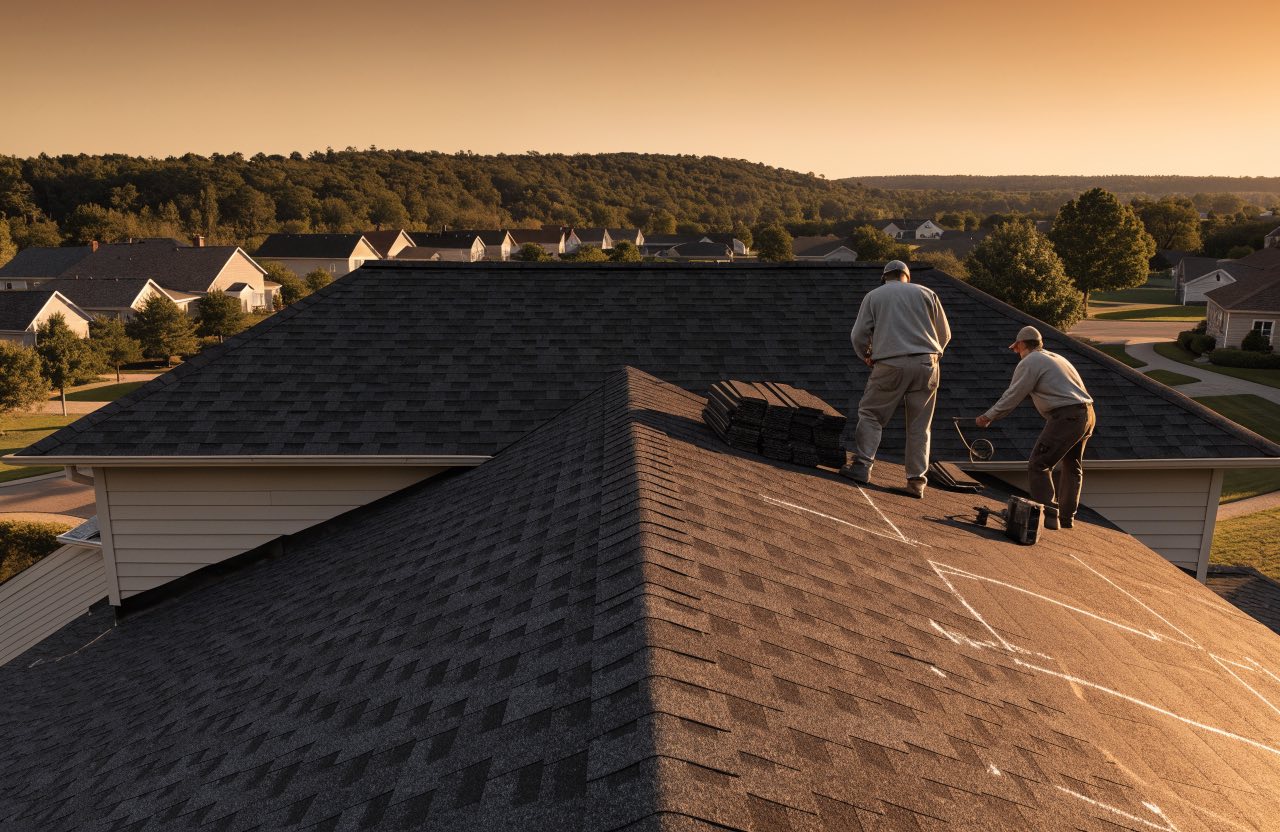
Good roof installation is more than laying down shingles or fastening metal panels. A reliable roofing system depends on the deck, underlayment, flashing, penetrations, ventilation, edge details, drainage, fasteners, and installation sequence working together. Missing one of those details can create problems long before the roofing material itself reaches the end of its expected life.
We are a roofing company that provides roof installation for new construction, additions, major remodels, and other projects where a complete roofing system is needed. We help property owners compare practical material choices and plan an installation suited to the building and Central Arkansas weather.

What Goes Into a Proper Roof Installation
Every roof has different geometry and exposure. We build the installation around the structure rather than treating roofing material as a surface-only product.
Roof Deck Preparation
The roof deck provides the base for the entire system, so damaged, uneven, or unsuitable decking needs attention before roofing materials are installed.
Underlayment
Proper underlayment adds a secondary layer of protection and supports the roofing system in vulnerable areas.
Flashing Details
Transitions, walls, valleys, penetrations, and roof edges require carefully installed flashing to manage water.
Ventilation
Balanced ventilation can help control attic heat and moisture when the building design allows for it.
Final Roofing Material
The visible roofing layer is installed according to the material type, roof conditions, and fastening requirements.
Typical Roof Installation Cost Factors
| Service | Estimated Cost | Average |
|---|---|---|
| Asphalt roof installation | $6-$12 per sq. ft. | $9 per sq. ft. |
| Architectural shingle installation | $7-$14 per sq. ft. | $10 per sq. ft. |
| Metal roof installation | $10-$20+ per sq. ft. | $15 per sq. ft. |
Planning ranges vary with roof size, slope, access, material, deck condition, flashing requirements, ventilation, tear-off needs, and project complexity.

Why Choose Us for Roof Installation?
Installation-first mindset
Roof installation is our primary focus, so preparation and system details receive the same attention as the finished surface.
Material guidance
We help you compare roofing choices based on the building, expected maintenance, appearance, and long-term goals.
Local conditions considered
Our installations are planned with Central Arkansas rain, heat, humidity, wind, and seasonal weather in mind.
Our Roof Installation Process
Review the plans or property
We learn about the structure, roof design, intended materials, drainage, ventilation, and project schedule.
Confirm the system
We outline roofing material, underlayment, flashing, ventilation, and other important installation details.
Prepare the roof
The deck and surrounding roof components are checked so installation begins on a sound foundation.
Install the roofing system
Materials are installed in the proper sequence with attention to water-shedding details and roof transitions.
Complete final review
We inspect the finished roof, clean the work area, and review any maintenance considerations.

Roof Installation Questions
What type of roofing is best for Arkansas homes?
Architectural asphalt shingles suit most Arkansas homes: they handle heat and humidity well, tolerate hail better than three-tab, and are cost-effective to repair. Metal is the stronger long-term choice if you plan to stay, particularly in hail-prone areas.
What are the best shingles for Arkansas weather?
Look for architectural shingles with a good wind rating and, if you are in a hail corridor, a Class 4 impact rating. Arkansas asks three things of a roof: sustained summer heat, humidity, and periodic hail and high wind.
What is the difference between architectural and three-tab shingles?
Three-tab is a single flat layer with a uniform pattern. Architectural shingles are laminated from multiple layers, so they are thicker, heavier, longer-lived and more wind resistant, with a dimensional look. Architectural costs more and is what most people choose now.
How long do asphalt shingles last?
In Arkansas, expect fifteen to twenty-five years for architectural shingles and rather less for three-tab. Heat and humidity age asphalt faster than a temperate climate does. Ventilation and installation quality affect the result as much as the product does.
Do 30-year shingles really last 30 years?
Rarely, and the number was never a promise of service life. It refers to the warranty term under specific conditions, prorated, with exclusions. A 30-year shingle in Arkansas commonly gives twenty. Treat the rating as a quality tier rather than a lifespan.
What are impact-resistant shingles?
Shingles built with a reinforced backing or modified asphalt so they absorb a hail strike instead of cracking. They are graded Class 1 through Class 4 by a standardized steel-ball impact test, with Class 4 the highest.
Are impact-resistant shingles worth the extra cost?
In Central Arkansas, often yes. They cost more up front, they survive hail that would total a standard roof, and many insurers offer a premium discount for Class 4. Ask your insurer what discount applies before you decide, because it changes the maths.
What are Class 3 and Class 4 shingles?
Impact ratings from a standard test dropping steel balls onto the shingle. Class 3 withstands a smaller impact, Class 4 the largest in the test and the highest rating available. Class 4 is the one insurers usually recognize for discounts.
What roofing material handles hail best?
Class 4 impact-rated shingles among asphalt options, and metal generally outperforms asphalt overall. Metal can still dent, which is cosmetic rather than functional. No roof is hail-proof. The realistic goal is a roof that takes a hit without leaking.
What roofing material handles high winds best?
Properly installed metal, then architectural shingles with a high wind rating. Installation matters more than product here. Most wind failures start at an edge or a poorly nailed course, not in the middle of a well-fastened field.
What roof color is best for a house?
Whatever suits the house and any neighbourhood restrictions. Lighter colours reflect slightly more heat, but with modern attic ventilation and insulation the practical difference is small. Choose for appearance and resale rather than expecting meaningful energy savings.
Does roof color affect home temperature?
Slightly. A dark roof surface runs hotter than a light one, but what reaches your living space depends far more on attic ventilation and insulation than on shingle colour. Fix ventilation before choosing colour for thermal reasons.
Do darker shingles make a house hotter?
The roof surface gets hotter. Whether the house does depends on what is between that surface and your ceiling. A dark roof over a well-ventilated, well-insulated attic is not a comfort problem. A light roof over a poorly ventilated one still is.
Are premium shingles worth the cost?
The step from three-tab to architectural is worth it almost always. The step from architectural to designer or luxury lines is mostly appearance, with some added weight and wind performance. Impact resistance is the upgrade that pays back in Arkansas.
Can I change the color of my roof when replacing it?
Yes, and replacement is the natural time to do it. Look at samples outdoors on the actual house rather than in a showroom. Roof colour reads very differently in direct sun at full scale.
What shingle brands are best?
The major manufacturers all make good architectural shingles, and the differences between them matter less than installation quality and ventilation. A mid-tier shingle installed correctly outlasts a premium one installed badly, every time.
How do I choose between roofing manufacturers?
Compare the warranty terms honestly, check that your contractor is certified to install the system if you want the enhanced warranty, and look at availability. A product nobody local stocks is a problem when you need a repair in five years.
Do roofing companies offer free estimates?
We do. You get a written estimate with the scope set out, at no cost and with no obligation. Be cautious of anyone who wants payment before telling you what the work involves.
What should be included in a roofing estimate?
Scope of work, materials by name and grade, tear-off and disposal, decking replacement terms and unit price, flashing and ventilation work, warranty terms, timeline, and payment schedule. If decking is not addressed, ask, because that is where surprises come from.
Why are roofing estimates from different contractors so different?
Usually because they are not quoting the same job. One includes tear-off and the other does not. One prices decking replacement and the other leaves it open. Materials differ. Compare scope line by line before comparing totals.
Are there hidden costs I should look for in a roofing estimate?
Ask specifically about decking replacement rates, disposal, permits, flashing and ventilation, and what happens if the crew finds something unexpected. A quote that does not mention decking is not cheaper. It is just less complete.
Contact Us Today for a Free Estimate
Planning a new roof? Tell us about the building, material, and project timeline.
Free — no obligations