When repairs are no longer enough
Roof Replacement in Little Rock
Find out whether replacement makes sense for your roof.
Know When It Is Time for a New Roof
Roof replacement becomes worth considering when damage or wear is no longer limited to one isolated area. Repeated leaks, widespread material deterioration, aging underlayment, multiple previous repairs, damaged decking, poor flashing, or a roof nearing the end of its useful life can make continued patching less dependable and less cost-effective.
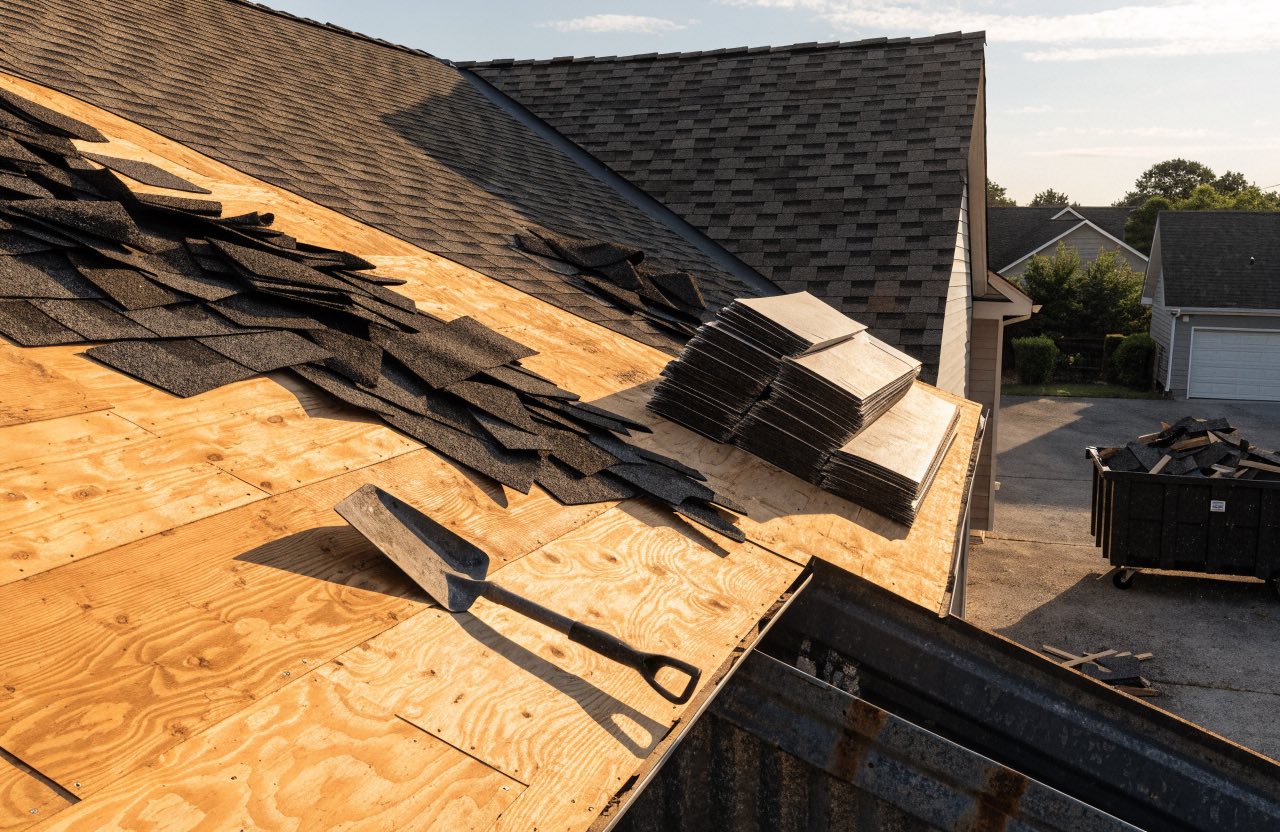
Our roof replacement process looks at both the visible roofing and the system underneath it. Once old materials are removed, the roof deck can be evaluated before the new underlayment, flashing, ventilation components, and final roofing material are installed. That creates an opportunity to correct hidden issues rather than covering them again.

What a Roof Replacement Can Address
Replacement provides a fresh roofing system, but the value comes from correcting weak points and installing the new roof carefully from the deck outward.
Aging Roofing Materials
Older shingles, metal panels, membranes, or other roof materials may lose their ability to protect the building reliably.
Repeated Leak Areas
When the same roof develops multiple leaks over time, replacement may become more practical than ongoing repairs.
Decking Problems
Removing the old roof allows damaged or deteriorated roof decking to be identified and addressed where necessary.
Updated Flashing
Roof replacement provides the opportunity to rebuild flashing details around edges, walls, valleys, and penetrations.
Material Upgrade
Some property owners use replacement as a chance to move to a different roofing material, style, or performance level.
Typical Roof Replacement Cost Factors
| Service | Estimated Cost | Average |
|---|---|---|
| Standard residential replacement | $7,000-$18,000+ | $12,000 |
| Large or complex residential roof | $15,000-$30,000+ | $21,000 |
| Metal roof replacement | $12,000-$35,000+ | $22,000 |
Roof replacement pricing depends on roof area, pitch, tear-off, disposal, materials, decking repairs, flashing, ventilation, stories, access, and project complexity.

Why Choose Us for Roof Replacement?
Full-system approach
We treat replacement as more than changing the surface material and pay attention to the layers and details below it.
Practical material choices
We discuss options based on the building, budget, appearance, expected service life, and maintenance goals.
Clear replacement reasoning
We explain why replacement is being considered so you understand how the roof condition supports the recommendation.
Our Roof Replacement Process
Evaluate the existing roof
We look at age, condition, visible damage, leak history, previous repairs, and overall roofing performance.
Select the replacement system
We discuss roofing material, ventilation, flashing, and project details before work begins.
Remove old materials
Existing roofing is removed as required so the deck and underlying conditions can be reviewed.
Prepare and install
Necessary deck work is completed before the new roofing system is installed in the proper sequence.
Final cleanup and review
The work area is cleaned and the completed roof is reviewed before the project is closed.

Roof Replacement Questions
How much does it cost to replace a roof in Little Rock?
A standard residential replacement generally runs $7,000 to $18,000, with $12,000 a reasonable midpoint. Large or complex roofs run $15,000 to $30,000 or more, and metal replacement $12,000 to $35,000 or more. Roof area, pitch, number of stories, tear-off, disposal and material choice drive the difference.
How much does a new roof cost in Arkansas?
Arkansas pricing sits close to the national middle. Most homeowners land between $7,000 and $18,000 for asphalt shingle replacement. Arkansas storm exposure does affect the calculation, because impact-resistant material costs more up front and can pay for itself in a hail-prone area.
How much does a roof cost for a 1,500-square-foot house?
Roof area is larger than floor area once pitch and overhangs are counted, so a 1,500 square foot house often has closer to 1,700 to 2,000 square feet of roof. At $6 to $12 per square foot installed, that points to roughly $10,000 to $24,000 depending on material and complexity.
How much does a roof cost for a 2,000-square-foot house?
Expect roughly 2,200 to 2,700 square feet of actual roof surface. At $6 to $12 per square foot for asphalt that suggests around $13,000 to $32,000, with most straightforward single-storey roofs landing in the lower half of that range.
How much does a roof cost for a 2,500-square-foot house?
Figure on 2,800 to 3,400 square feet of roof surface. Asphalt at $6 to $12 per square foot points to roughly $17,000 to $40,000. Larger roofs are usually more complex as well as bigger, which is why the top of the range climbs faster than the floor area does.
How is the cost of a new roof calculated?
By roof area in squares, not by house size. Then adjusted for pitch, because steep roofs are slower and need more safety equipment, number of layers to tear off, decking condition, material, and the number of penetrations, valleys and hips. Access matters too.
What factors make a roof replacement more expensive?
Steep pitch, multiple storeys, several existing layers to remove, rotten decking found during tear-off, complex rooflines with many valleys and hips, premium or impact-resistant material, and difficult access for equipment and disposal.
What is the cheapest time of year to replace a roof?
Late winter and early spring, before storm season loads up every schedule in Central Arkansas. Demand sets roofing prices more than season does. After a significant hail event, every roofer in the region is busy and pricing reflects it.
Can I replace my roof in sections to save money?
You can, but it usually costs more overall. Each phase carries its own setup, disposal and mobilization, and the sections will not weather evenly. It makes sense when one slope has failed and the rest is genuinely sound, not as a budgeting strategy.
Can I finance a new roof?
Financing options exist through lenders and some manufacturers. We are happy to talk through what a project would cost so you can arrange funding, but choose a roof based on what the building needs and then work out how to pay for it, not the other way round.
Is a new roof tax deductible?
For your own home, generally not as a deduction. It is usually treated as a capital improvement that adjusts your cost basis when you sell. Rental and commercial property is treated differently. Ask your accountant, because this depends on your specific situation rather than on the roof.
Does a new roof increase the value of my home?
It protects value more reliably than it adds it. Buyers rarely pay a premium for a new roof, but an old roof reduces offers, complicates inspections and can hold up financing. Think of it as removing a deduction rather than adding a bonus.
How do I know whether my roof needs repair or replacement?
Roughly: is the damage localized or general, and how much life is left? Isolated damage on a roof with years remaining is a repair. Widespread wear, repeated leaks in different places, or damage on a roof near the end of its life points to replacement.
What are the signs that I need a new roof?
Granules collecting in gutters, shingles curling or cupping across whole slopes, repeated leaks in different locations, daylight visible in the attic, sagging areas, and roof age past twenty years. One of these is worth an inspection. Several together usually means replacement.
How old is too old for a roof?
Asphalt shingle roofs in Arkansas generally give fifteen to twenty-five years. Past twenty, the question changes from whether it will need replacing to when. Heat, humidity and storm exposure here are harder on roofing than a milder climate would be.
Should I replace a 20-year-old roof?
Not automatically. Twenty years is where you start planning rather than where you must act. If it is sound, watch it and budget. If it is leaking or losing granules heavily, replacing it on your schedule beats replacing it after it fails in February.
Can a 25-year-old roof still be repaired?
Physically yes, and sometimes it is the right call. But old shingles are brittle, they crack when lifted, and a new patch sits in a field of material that is nearly finished. Spending well on a roof with two years left is rarely good value.
Should I replace my roof if it isn't leaking?
Not leaking is not the same as performing. Roofs fail gradually and then suddenly. If yours is at the end of its expected life with visible deterioration, replacing before failure means you choose the timing, the material and the price, rather than an emergency choosing for you.
Does a leaking roof always need to be replaced?
No, and anyone who tells you otherwise on the phone has not seen your roof. Plenty of leaks are one failed flashing detail on a roof with a decade left. The leak tells you something is wrong, not how much.
Should I repair my roof before selling my house?
Usually yes for known defects, because buyers discover them anyway and then negotiate from a position of concern. A full replacement purely to sell rarely returns its cost. Fixing the specific problem so it does not appear on an inspection report generally does.
Can you sell a house with an old roof?
Yes. Expect it to come up in inspection and negotiation, and expect some buyers' lenders to have opinions about it, particularly if there is visible damage. Many people sell with an old roof and adjust the price rather than replacing it first.
How long does it take to replace a roof?
Most residential roofs are one to three days. Straightforward single-storey homes are often a single day. Complex rooflines, multiple layers to tear off, or discovered decking damage add time. Weather is the usual reason a job runs longer than planned.
Can a roof be replaced in one day?
Many can. A typical single-storey asphalt roof with one layer to remove is commonly a one-day job with an adequate crew. We would rather tell you two days and finish in one than the reverse.
What happens during a roof replacement?
Protection goes down around the house, the old roofing comes off, the decking is inspected and repaired where needed, then underlayment, flashing, starter and field shingles, and ridge. The site is cleaned and magnet-swept for nails before we leave.
Do I need to be home while my roof is being replaced?
No. We need access to the roof and the driveway, not to the inside. Plenty of clients are at work throughout. If decisions come up, such as unexpected decking damage, we will call you.
Can I stay in my house during roof replacement?
Yes, and most people do. It is loud, so it is worth planning around anyone who works from home, sleeps during the day, or has a young child napping. Pets often find the noise more stressful than people do.
How noisy is roof replacement?
Genuinely loud. Tear-off is impact noise directly on your ceiling, and nail guns run most of the day. It is a normal working day of construction noise, not something we can meaningfully reduce.
Should I move my car before roof replacement?
Yes. Move vehicles off the driveway and away from the house. Debris and nails come off the roof during tear-off, and we need driveway space for the dumpster and materials.
Do I need to remove items from my attic?
Cover or move anything valuable or fragile directly beneath the roof deck. Tear-off shakes loose decades of dust and debris through the decking. We are not usually in your attic, but the vibration reaches it.
Can roofing work damage items inside my house?
Vibration can knock loose pictures or shelved items on upper floors, and attic dust gets stirred up. Take pictures down from upstairs walls before we start. Actual damage is rare, but the shaking is real.
What happens to my gutters during roof replacement?
They stay unless they need replacing. Gutters can be dented by falling debris, so we protect them, and it is common to replace gutters at the same time as a roof since access and disposal are already arranged.
What happens to satellite dishes during roof replacement?
We remove and refit them where practical, but alignment is not something a roofer can guarantee. If you rely on the service, arrange for the provider to realign afterwards.
How do roofers protect landscaping during a replacement?
Tarps and plywood over beds and shrubs beneath the work area, careful dumpster placement, and controlled debris removal rather than letting material fall freely. Tell us in advance about anything you particularly care about.
Who cleans up roofing nails and debris?
We do, and we sweep the ground with a magnet before we leave. Nails are the main hazard of a roofing job for tyres and bare feet. If you find one afterwards, tell us.
What happens if it rains during roof replacement?
We do not tear off more than we can dry in and cover. Work stops and exposed areas are protected with underlayment or tarps. Rain delays roofs routinely in Arkansas and is the usual reason a job takes an extra day.
Can a roof be replaced during winter?
Yes, with care. Winter here is mild enough for roofing on most days. The constraint is temperature, because asphalt shingles need warmth to seal properly, and ice or frost makes a roof unsafe to work.
What temperatures are too cold to install shingles?
Below roughly 40 degrees Fahrenheit, shingles get brittle and the adhesive strip will not seal on its own until it warms. They can still be installed correctly with hand-sealing, but it is extra work and needs to be done deliberately.
Does the old roof have to be torn off?
Not always, but usually it should be. Tear-off is the only way to see the decking. Layering over hides problems, adds weight, shortens the new roof's life through trapped heat, and voids some manufacturer warranties.
Can new shingles be installed over old shingles?
It is permitted in many cases and we would rarely recommend it. You save on disposal and pay for it in a shorter roof life, no inspection of the decking, and a lumpy surface that telegraphs through the new shingles.
How many layers of shingles can a roof have?
Building codes commonly cap it at two. Beyond that the weight and heat retention become problems. If you already have two layers, the next roof is a tear-off regardless.
What happens if rotten decking is found?
We stop, photograph it, call you and tell you the cost before replacing it. Rotten decking cannot be roofed over. It is the most common source of a change to the original quote, which is why we mention it before the job rather than after.
How do I prepare my home for roof replacement?
Move vehicles off the driveway, take pictures off upstairs walls, cover attic contents, secure pets somewhere quiet, and clear access around the house. Tell us about anything fragile in the landscaping.
Contact Us Today for a Free Estimate
If repairs keep adding up, ask whether a complete roof replacement could be the better long-term choice.
Free — no obligations