Understanding a roof damage claim
Roof Insurance Claims in Little Rock
Not sure whether you have a claim? We will look and tell you.
What We Can and Cannot Do on an Insurance Claim
We are roofers, not public adjusters or attorneys. What we can do is inspect your roof, document what we find in a form that is useful to an insurer, meet the adjuster on site, and carry out the repair to the scope that gets approved.
What we cannot do is decide your claim, interpret your policy for you, or promise an outcome. Coverage depends on your specific policy and your insurer's assessment. Anyone who tells you before an inspection that your claim will be approved is guessing, and anyone who offers to cover your deductible is proposing something you should walk away from.

How We Support a Roof Insurance Claim
A claim goes better when the damage is documented properly and the scope of work is agreed clearly. That is the part we can genuinely help with.
Damage Documentation
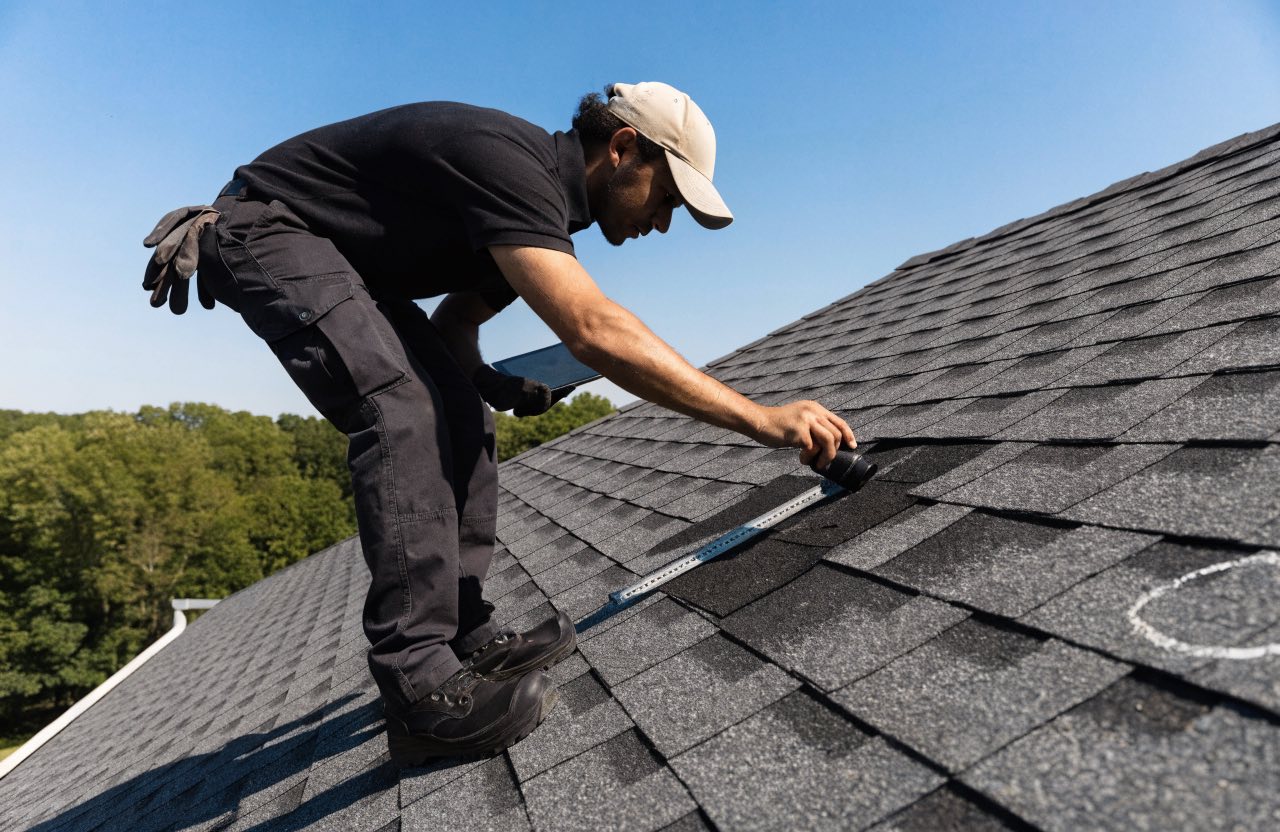
Photographs of the roof, the soft metals and the affected areas, with a written assessment of what we found and what caused it.
Meeting the Adjuster
We can be on site when your adjuster inspects, so questions about the roof are answered by someone who has been on it.
Scope Review
We compare the approved scope against what the roof actually needs and tell you plainly where we think there is a gap.
Repair to Approved Scope
We complete the work agreed with your insurer, and document it for your records and any warranty.
Straight Answers on Whether to Claim
Sometimes the damage falls under your deductible or is not storm-related at all. We will say so.

Why Choose Us for Roof Insurance Claims?
We will tell you not to claim
If the damage does not justify it, filing is not in your interest. We would rather say that than start a process that costs you a claim on your record for nothing.
No deductible games
We will not offer to absorb your deductible. It is insurance fraud, it is illegal in many states, and any contractor proposing it is telling you what they are.
Documented, not asserted
Photographs and written findings, so what goes to your insurer is evidence rather than opinion.
How a Roof Claim Usually Goes
Inspection first
We look at the roof and tell you whether there is damage, what caused it, and whether it is likely to exceed your deductible.
You file the claim
The claim is between you and your insurer. We give you the documentation to support it.
Adjuster visit
We can be there when the adjuster inspects, so both parties are looking at the same roof at the same time.
Agree the scope and repair
Once the scope is approved we complete the work, and where something was genuinely missed we help document a supplement.

Roof Insurance Claims Questions
Does homeowners insurance cover roof damage?
Most policies cover sudden accidental damage from events such as hail, wind and falling objects. Most exclude wear, age and lack of maintenance. Your policy is the authority here, and the wording differs meaningfully between carriers, so read yours or ask your agent.
Does homeowners insurance cover roof leaks?
It depends on the cause. A leak from storm damage is generally treated differently from a leak caused by a roof that has simply worn out. Resulting interior damage is often covered even where the roof itself is not. Check your policy.
Does insurance cover hail damage to a roof?
Hail is a covered peril under most homeowners policies, subject to your deductible and any separate wind and hail deductible, which is sometimes a percentage of the dwelling value rather than a flat sum. Some policies limit cosmetic damage cover.
Does insurance cover wind damage?
Wind is generally a covered peril. Watch for a separate wind and hail deductible, which is common in storm-exposed regions and can be considerably higher than your standard deductible.
Will insurance pay for a complete roof replacement?
Sometimes. It depends on how widespread the damage is, your policy terms, and whether matching undamaged sections is practical. Insurers commonly approve repair where damage is localized and replacement where it is not.
Will insurance pay to replace only part of my roof?
This is common and it is where disputes often start, because a partial replacement can leave you with visibly mismatched roofing. Some policies address matching and some do not. It is worth knowing what yours says before the conversation.
Does insurance cover an old roof?
Often yes for storm damage, but the settlement may be reduced for depreciation depending on whether you hold actual cash value or replacement cost cover. Some insurers restrict older roofs to actual cash value at renewal.
Can an insurance company deny a roof claim because of the roof's age?
Age alone is not usually the stated reason. Insurers deny claims where they conclude the damage resulted from wear rather than a covered event, and an older roof makes that argument easier for them. Good documentation is your counterweight.
What is an ACV vs. RCV roof insurance policy?
Replacement cost value pays what it costs to replace the roof. Actual cash value pays that figure minus depreciation for the roof's age and condition, which on an older roof can be a very large reduction. Check which you have. It is one of the most consequential lines in your policy.
What is a roofing deductible?
The amount you pay before your insurer pays anything. On roofing claims it is often a separate wind and hail deductible, sometimes expressed as a percentage of the insured value of the home rather than a fixed dollar amount.
Do I have to pay my insurance deductible?
Yes. It is your contractual share of the loss. A contractor who offers to absorb it is proposing to misrepresent the cost of the work to your insurer, which is fraud and is illegal in many states.
Can a roofing contractor waive my deductible?
No, and you should treat the offer as a serious warning. It requires inflating the invoice to the insurer, which is insurance fraud, exposes you as well as the contractor, and tells you exactly how that company treats rules it finds inconvenient.
How long do I have to file a roof-damage claim?
Policies set a reporting deadline and it varies, commonly within a year of the event, sometimes less. The practical deadline is shorter, because linking damage to a specific storm gets harder over time. Report promptly.
What happens during an insurance roof inspection?
An adjuster inspects the roof, usually documenting damage in a test area and extrapolating, checks soft metals for corroborating evidence, and writes an estimate using standardized pricing software. It is generally quicker than people expect.
Should my roofer meet with the insurance adjuster?
It usually helps. The adjuster and the roofer can look at the same roof together, and disagreements about what is storm damage and what is wear get resolved on the roof rather than in letters afterwards.
What if the insurance estimate is lower than the roofing estimate?
It is common and often resolvable. Usually something was missed or priced at a lower specification. The route is a documented supplement to the insurer setting out what was omitted and why, rather than either party simply asserting a different number.
What is a roofing supplement?
A request to your insurer to revise an approved scope, supported by evidence, when the initial estimate missed work the job genuinely requires. Decking discovered during tear-off is a typical example, since nobody could see it beforehand.
What happens if insurance only approves a repair but the roofer recommends replacement?
You have three options: accept the repair, pursue a supplement with supporting documentation, or pay the difference for the fuller scope. We will tell you honestly which we think is justified, but the decision is yours and the insurer's.
Will filing a roof claim increase my insurance premium?
It can, and weather-related claims are usually treated more leniently than liability claims. Practice varies by carrier. This is a fair question to put to your agent before you file, particularly where the damage is close to your deductible.
Contact Us Today for a Free Estimate
Not sure whether your roof damage is worth a claim? Ask us to look first.
Free — no obligations